LBMA Good Delivery Standards: The Complete Guide to Silver Bar Quality & Specifications
The London Bullion Market Association (LBMA) Good Delivery List is the global gold standard for precious metals bar quality and refinery accreditation. For international silver buyers — whether you are a US jewelry manufacturer sourcing grain, a Japanese industrial buyer procuring bars for electronics production, or a European investment fund acquiring vaulted bullion — understanding LBMA standards is essential to ensuring you receive product that meets the highest international specifications. This guide explains everything you need to know about LBMA Good Delivery silver standards, from bar specifications to assay requirements, and why working with LBMA-compliant suppliers protects your supply chain.
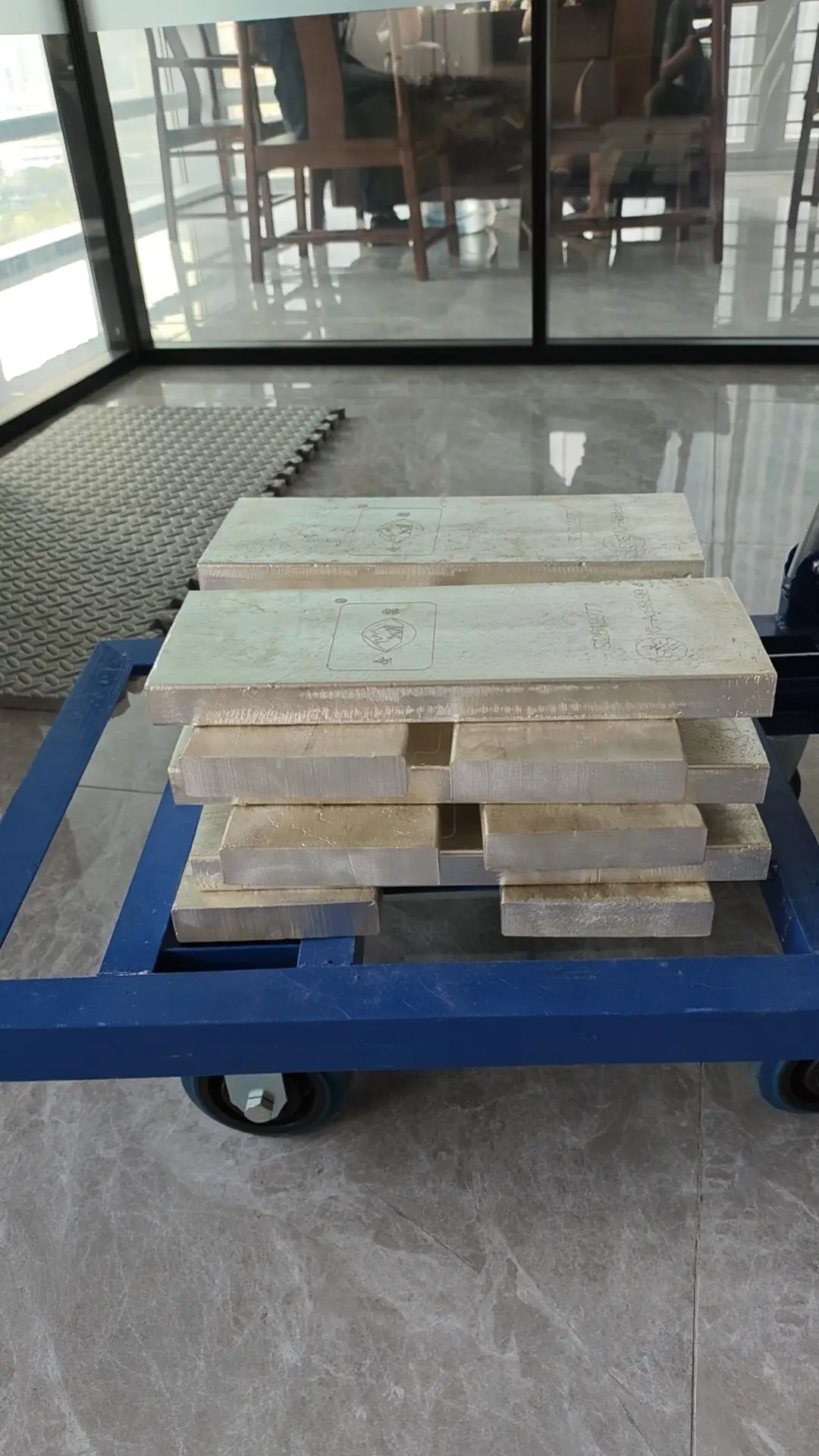
What Is the LBMA Good Delivery List?
The LBMA Good Delivery List is a register of gold and silver refineries that meet the LBMA's stringent requirements for production quality, assaying capability, financial standing, and operational integrity. Established in 1987 (for silver), the Good Delivery List defines the technical specifications for standard silver bars accepted for settlement in the London bullion market — the world's largest over-the-counter precious metals trading center, with daily silver clearing volumes exceeding 200 million ounces.
As of 2026, approximately 80 refineries worldwide hold LBMA Good Delivery accreditation for silver. These refineries span over 30 countries, with major concentrations in China (approximately 15 accredited refiners), Japan, South Korea, Switzerland, Germany, Russia, and the Americas. Bars produced by LBMA-accredited refiners are accepted without additional testing by virtually all major bullion banks, exchanges, and vault operators worldwide.
Key Fact: An LBMA Good Delivery silver bar is the only silver bar format universally accepted for settlement in the London OTC market, COMEX-approved vaults, and LBMA-member vaults in London, Zurich, Singapore, and Hong Kong. Non-Good Delivery bars typically trade at a discount of 1–3% below London spot.
LBMA Silver Bar Specifications
The LBMA sets precise physical and chemical specifications for Good Delivery silver bars. These specifications ensure uniformity, facilitate efficient vault storage, and guarantee that bars meet minimum purity requirements for international trade. The standard specifications are:
| Specification | LBMA Requirement | Notes |
|---|---|---|
| Minimum Purity | 999.0 parts per thousand (99.9%) | Most modern bars achieve 999.9 (99.99%) |
| Weight Range | 500–1,250 troy ounces (approx. 15.5–38.9 kg) | Most common: 1,000 oz (31.1 kg) |
| Weight Tolerance | ±2.5 troy ounces from stamped weight | Must match bar mark exactly |
| Bar Markings | Refiner's mark, serial number, year of manufacture, fineness, weight (troy ounces) | Stamped or engraved on bar surface |
| Surface Finish | Smooth, free from cavities and projections | Facilitates stacking and handling |
| Dimensions | Not strictly specified | Typical: 300mm × 130mm × 80mm (L×W×H) |
While the 1,000 troy ounce bar is the most widely traded Good Delivery format, bars of other weights within the specified range are equally acceptable provided they meet all other specifications. Smaller bars — such as 500 oz, 100 oz, and 1 kg formats — are common for retail and industrial distribution, though these are not technically "Good Delivery" bars unless they fall within the 500–1,250 oz weight range. Bars outside this weight range may still be LBMA-compliant in purity and provenance but are classified as "small bars" rather than Good Delivery bars.
The Refinery Accreditation Process
Obtaining LBMA Good Delivery accreditation is a rigorous, multi-year process that evaluates every aspect of a refinery's operations. The accreditation process includes five key components:
1. Technical Capability Assessment
The LBMA requires evidence of consistent production of silver bars meeting Good Delivery specifications over a minimum period of three years. Refineries must demonstrate annual silver production of at least 10 tonnes and must operate in-house assay laboratories with demonstrated proficiency in fire assay, ICP-OES (Inductively Coupled Plasma Optical Emission Spectroscopy), and XRF (X-ray Fluorescence) analysis.
2. Financial Standing Review
Applicants must demonstrate a minimum net tangible worth of £15 million (or equivalent), provide three years of audited financial statements, and maintain adequate insurance coverage for precious metals in their custody. This requirement ensures that accredited refiners have the financial stability to honor delivery commitments and manage the significant working capital requirements of precious metals refining.
3. Commercial Standing Evaluation
The LBMA assesses the applicant's reputation in the market through references from at least three LBMA member banks or accredited refiners. The applicant must demonstrate a track record of reliable delivery, ethical business practices, and compliance with all applicable laws and regulations, including anti-money laundering (AML) and know-your-customer (KYC) requirements.
4. Proactive Monitoring
LBMA-accredited refiners are subject to ongoing proactive monitoring, including annual production surveys, random bar sampling and assay verification, and periodic site inspections. The LBMA works with independent assay laboratories to cross-check bar purity from random samples drawn from the market. Refiners that fail to maintain standards may be suspended or removed from the Good Delivery List.
5. Responsible Sourcing Compliance
Since 2012, all LBMA Good Delivery refiners must comply with the LBMA Responsible Sourcing Programme, which requires adherence to the OECD Due Diligence Guidance for Responsible Supply Chains of Minerals from Conflict-Affected and High-Risk Areas. This includes annual third-party audits of the refiner's supply chain due diligence practices, ensuring that silver feedstock does not finance conflict, human rights abuses, or environmental degradation.
Why LBMA Certification Matters for Buyers
Purchasing silver from LBMA-compliant sources provides buyers with multiple layers of protection and value:
- Universal acceptance: LBMA Good Delivery bars are accepted by all major bullion banks, vault operators, exchanges, and customs authorities worldwide. Non-LBMA bars may face rejection at vaults, additional assay requirements at customs, or price discounts in secondary markets.
- Quality assurance: The LBMA's proactive monitoring program ensures that bar purity and weight specifications are maintained over time. Random assay testing provides independent verification beyond the refiner's own certificates.
- Liquidity: LBMA Good Delivery bars are the most liquid physical silver format, with tight bid-offer spreads and deep institutional market-making from bullion bank trading desks.
- Supply chain integrity: LBMA Responsible Sourcing compliance provides assurance that silver has been ethically sourced, meeting the increasingly stringent ESG requirements of institutional investors and corporate procurement policies.
- Customs facilitation: Many countries' customs authorities recognize LBMA certification as prima facie evidence of bar quality, streamlining import clearance and reducing the likelihood of additional assay requirements at the border.
Common Silver Bar Formats Beyond Good Delivery
While Good Delivery bars dominate institutional trading, most industrial and retail buyers work with smaller formats that are typically produced from Good Delivery bars or sourced from the same LBMA-accredited refineries:
- 100 oz bars (approx. 3.11 kg): Popular with US and European investors. COMEX-approved 100 oz bars must meet specific dimensional and marking requirements in addition to purity standards.
- 1 kg bars (32.15 oz): The preferred format for Asian markets, particularly Japan, China, and India. Compact dimensions facilitate secure storage and transport.
- Silver grain (shot): 1–5 mm diameter granules used primarily in jewelry manufacturing, electroplating, and industrial brazing applications. Purity typically 999.9.
- Silver powder: Sub-100 micron particles used in conductive pastes, photovoltaic cell manufacturing, and specialty chemical applications. Requires specialized packaging to prevent oxidation.
Verifying LBMA Compliance
When sourcing silver, buyers should verify LBMA compliance through several channels. First, check the LBMA's official website (lbma.org.uk), which maintains a current Good Delivery List for both gold and silver. Second, request the refiner's LBMA accreditation certificate — reputable suppliers will provide this without hesitation. Third, verify that assay certificates accompanying specific bars match the refiner's marks on the bar surface, including the refiner's logo, serial number, and year of manufacture. Serial numbers should be traceable through the refiner's own records.
HK Changjiang sources exclusively from LBMA-accredited refiners and provides full documentation — including refiner assay certificates, independent third-party verification reports where requested, and complete chain-of-custody records — with every shipment. We encourage buyers to independently verify all documentation before accepting delivery.
Hong Kong's Role in LBMA Silver Distribution
Hong Kong occupies a strategic position in the global LBMA silver supply chain. As the gateway between Chinese refiners — who represent the world's largest concentration of LBMA-accredited silver refining capacity — and international buyers, Hong Kong facilitates efficient distribution of LBMA-compliant silver to markets across Asia, the Americas, and Europe. Hong Kong's airport precious metals vault, operated by Malca-Amit, provides secure interim storage for silver shipments transiting through Hong Kong, with capacity for over 1,000 tonnes of precious metals.
Conclusion
LBMA Good Delivery accreditation remains the single most important quality standard in the international silver market. For buyers, understanding these standards — and verifying that suppliers adhere to them — is essential due diligence. Whether you are purchasing 1 kg bars for investment, 100 oz bars for industrial consumption, or silver grain for manufacturing, sourcing from LBMA-compliant supply chains ensures consistent quality, universal acceptability, and supply chain integrity.
📩 Need LBMA-certified silver?
HK Changjiang supplies exclusively from LBMA-accredited refiners with full documentation — assay certificates, chain-of-custody records, and customs-ready paperwork. Contact our team for a quotation.
Request a Quote Chat on WhatsApp